Art in Manufacturing: Artist Films and Interviews with Matter at hand, Liaqat Rasul and Wash
29th November 2025
For each season of Art in Manufacturing, we commission Lancashire-based filmmakers Wash to produce short films that serve as permanent and accessible documentation of often in–progress and ephemeral artworks.
These films capture artists’ personal insights and ideas behind their work, and their experiences working in residency at partner manufacturers.
You can watch the latest short films in this series below, and also read accompanying interviews with artists Matter at hand (Lewis Jones) and Liaqat Rasul, as well as with Andy Walmsley, Creative Director of Wash.
Matter at hand (Lewis Jones) – Poured Earth
What was it like adapting to an industrial environment compared to your usual studio or workspace?
Working inside the factory has really been an amazing experience. Going in, behind closed doors and understanding from the inside, how things are made is an extraordinary privilege. It’s been an unfamiliar and very stimulating place to work and learn – seeing all the projects that Darwen Terracotta are working on, learning from their generous sharing of expertise and really getting an insight into the incredible complexity of materials we see and use every day.
Did you find yourself experimenting with new materials or techniques during your time in the factory?
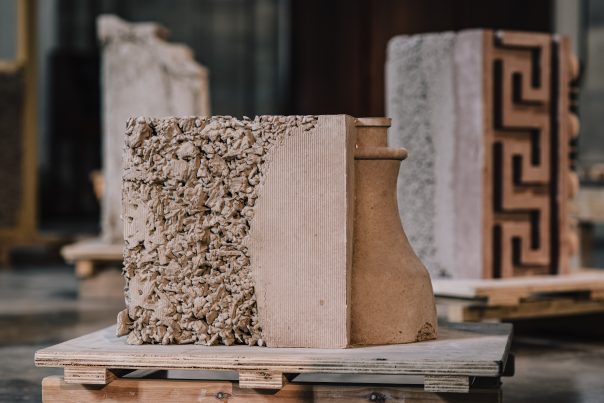
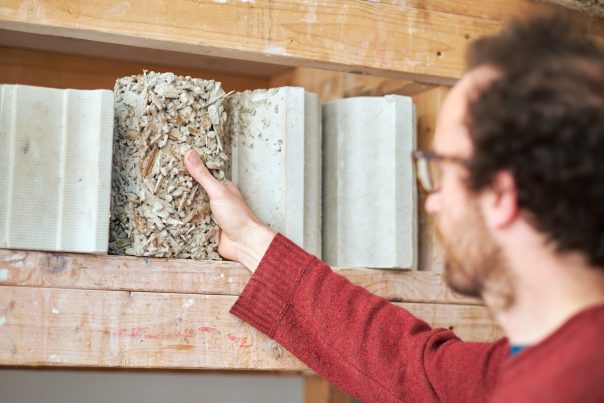
Yes! The residency was really focused on learning from Darwen Terracotta’s specialist knowledge in slip-casting, and applying this to unfired, earthen construction. Over the course of the residency I developed a range of different mixes and production techniques, re-using waste materials from across the North West alongside techniques and materials from inside the factory to create a range of prototypes for Poured Earth as a construction method.
Has this experience influenced how you think about collaboration or materials in future projects?
In terms of materials, it’s really been an amazing opportunity to zoom in and develop an expanded understanding of clay as a material and a fundamental building block of life on earth. There is so much I’ve learnt about this material that I’ll take forward into future projects – about the extent it has shaped our natural and built environments, its ability to hold nutrients, colour and contaminants; its shapeshifting ability in the presence of water, and how, by drawing on the specialist skills and know-how from a range of different disciplines, it could be used to develop approaches to building with a positive impact on the environment.
I’ve learnt from exploring what connections can be made by using clay as a binder in conjunction with other material resources in the North West – about British forestry, about soil washing and recycling from construction, about textile waste and non-woven felting, about natural dyes and fibre crops. About clay’s ability to bind with both organic and inorganic matter to make a range of different building materials. These are all things I’d like to take forward!
In terms of collaboration – it’s been an incredible experience – the knowledge, time and expertise that’s been so generously shared by everyone throughout my residency. It’s been a real privilege to have been working with such an extraordinarily skilled and generous group of people, and I’m very much looking forward to it continuing next year.
Did the festival setting change how you saw your own piece?
It was great to see the work in that public context, surrounded by people and conversation, and to test how these construction ideas communicate beyond the factory. It gave me a new sense of how the materials and processes might operate at a larger scale, and how the project could evolve as a more public form of making and learning.
Were there any reactions or conversations that particularly resonated with you?
It was great to talk to people about where the project might go next, moving from experimental prototypes towards something that could be built and tested at scale. Hearing how people connected it to their own practices, whether in architecture, craft, or questions of housing and construction in their area, was really interesting and opened up a lot of new directions for collaboration.
What advice would you give to other artists taking part in a residency like this?
I think just to stay open, to approach it as a process of learning rather than producing. Be curious, ask questions, and spend as much time as you can there.
What’s next for you? Are there ways this project will continue to develop beyond the festival?
The project is going to carry on, and I can’t wait to be back for next year’s festival! I’ll be developing the next phase of Poured Earth, scaling up some of the prototypes and testing how they perform in real-world conditions. There’s still so much to explore in terms of mix design, structure and surface, and how these materials can have a meaningful impact in how we design and make buildings.
Liaqat Rasul – Umeed (Oh-meed)  – Gobaith – Hope
Can you share a moment or experience from the residency that really stayed with you?
Lots of moments, it’s the combination of community and art working together, the logistics of me being up and down to Herbert Pakinson back to London, over a 3 month period was trying and wonderful.
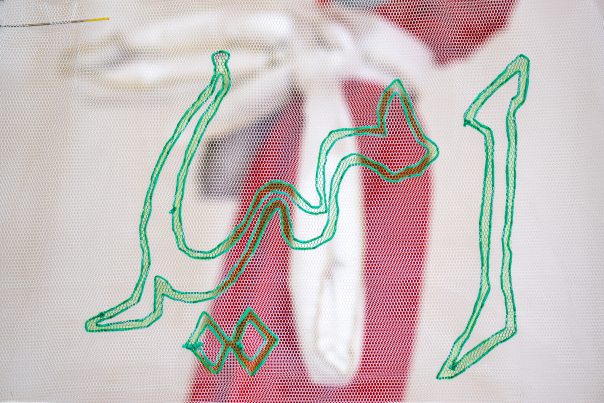
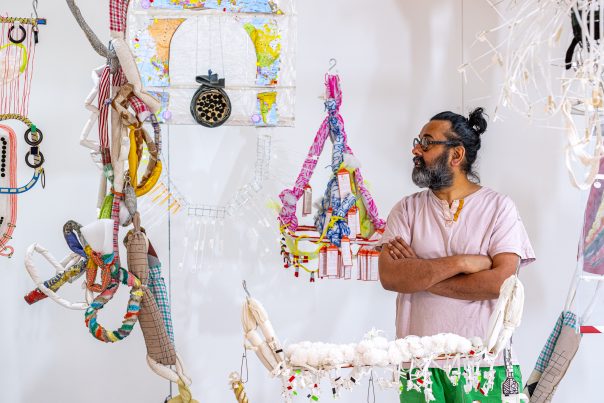
I loved members of the elderly Pakistani community coming to see the work and reading Umeed in Urdu as they walked past and watched them smile.
Were there specific stories, people, or aspects of the factory you wanted to highlight through your work?
All the partners at Herbert Parkison made me feel very welcome and how business can mean looking after staff, I loved the partners business model.
How did your artistic process evolve throughout the residency?
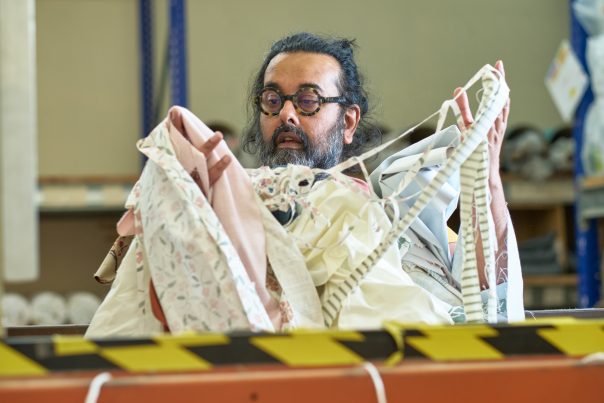
Intense, challenging, productive, confusing, elated, needed to be organised, tried to be organised managing schedules, dates, locations and timelines, pockets of creativity, my head in the waste bins, I loved the cardboard offcuts.
Did you approach your creative process differently, knowing your work would be shared in a festival setting?
No, I completely trusted the process. The National Festival of Making team prodded me occasionally to ask me questions which was super useful.
What did you hope people would understand or feel when they experience your work?
Umeed (Oh-meed) – Gobaith – Hope
Let’s all hope for a better and kinder future, smile at people, be generous in your time, help people.
What advice would you give to other artists taking part in a residency like this?
Be brave, no question or query is too silly, the National Festival of Making team are there to support you. They are brilliant.
What’s next for you? Are there ways this project will continue to develop beyond the festival?
Still hustling, I love creating networks and collaborating. I am working on a piece about the 1943 Bengal Famine.
Andy Walmsley (Wash) – AiM Filmmaker
Who are Wash, and what do you do?
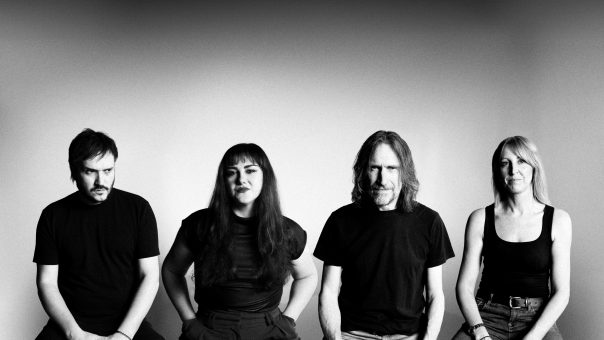
Wash is a creative agency/studio based in Preston with a team of four. All senior members and with many years experience between us. However I mainly head up the film side of our business now. As I came from an art director background it felt a natural transition, and it’s now a real passion I found late on in life.
In your Art in Manufacturing films, when capturing the look and feel of a factory in the context of it being a creative place where artists and manufacturers collaborate, is there something specific you look for, or is there an element of spontaneity and happenstance on the day?
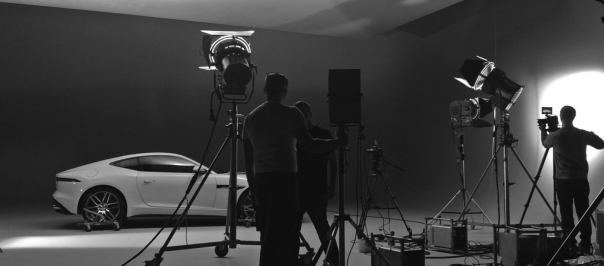
It’s normally a simple act of spontaneity, however whilst filming the artists and as the shoot progresses, I do get a sense of their personality and persona, that I try to inject into the films.
Through photography, film and design, Art in Manufacturing has developed a recognisable personality and visual language as the programme has evolved. What role does film play in communicating this, and how would you describe the visual language of Art in Manufacturing?
I think the visual language comes from the parameters we have to work in. I can only speak from a film perspective, but as our time is limited on the shoots working in a factory environment can often prove challenging. Also our time is limited with the artists as we can’t be there throughout the whole making process. I feel I need to shoot a specific way to actually tell a narrative and make the films feel engaging.
I’m not one for fancy filters or frantic transitions. So I try and give the films a slower pace. A more crafted pace in the edit. I do feel this style has contributed a lot to the visual language.
Can you tell us about something unusual, surprising or challenging that has happened when producing Art in Manufacturing films?
They are all surprising and challenging as you don’t know what you are going to encounter until you are on the shoot really.
Often working with other creatives can be a challenge as they have their own preconceived idea of how I need to represent them in a film. But to be honest, throughout all the years making these films, every artist has been brilliant.
The factories or place of manufacturing have also always been so helpful, so nothing too challenging to report on that question.
However I also think it’s helped me in my way of working with people. As often I may have gone in on a shoot with my own preconceived ideas of what the artist or environment would be like, often to be proven wrong. So that’s good!
How does producing art documentary films differ from your commercial work?
Our work varies so much – from TV commercials to art documentaries. But I do love a narrative or story, so we try to inject that in our work as much as possible. As that’s such a great creative challenge…that’s what we are good at. It’s not just pretty pictures for us.
Also the commercial world is changing and people buy into people and what they stand for. So getting that genuine, authentic voice across is always our creative challenge, either in commercial or art based work.
What have you learned from working on Art in Manufacturing films – either personally or that might have impacted your other work?
I’ve got much better at working with people over the years and getting into the true essence of what they are about. AiM has certainly helped me in that journey.
What have you got coming up that you’d like to tell us about?
I’ve got a couple of short artists films I’m making for The Artistry House. It’s an area I want to build up on.
Being a painter and artist myself, I have a huge fascination in what makes artists tick… why do they do what they do.
So I want to make more. However those films don’t pay the bills unfortunately so I need to keep hunting for the commercial work. And right now it’s tough out there. A lot of competition and spend is down for many businesses. So we shall see what happens over the next few months.
Learn more about the Art in Manufacturing residencies at artinmanufacturing.co.uk.